
By Dr. Alexandria Hooks, DNP
The gut microbiome is the large community of bacteria and other tiny organisms that live in your digestive tract. These microbes help break down food, produce useful substances, and send signals that affect many parts of the body. Research suggests that the gut microbiome may play a role in weight gain, weight loss, and weight maintenance, although it is only one part of the picture. Diet, physical activity, sleep, stress, genetics, and medications still matter a great deal. [1,2]
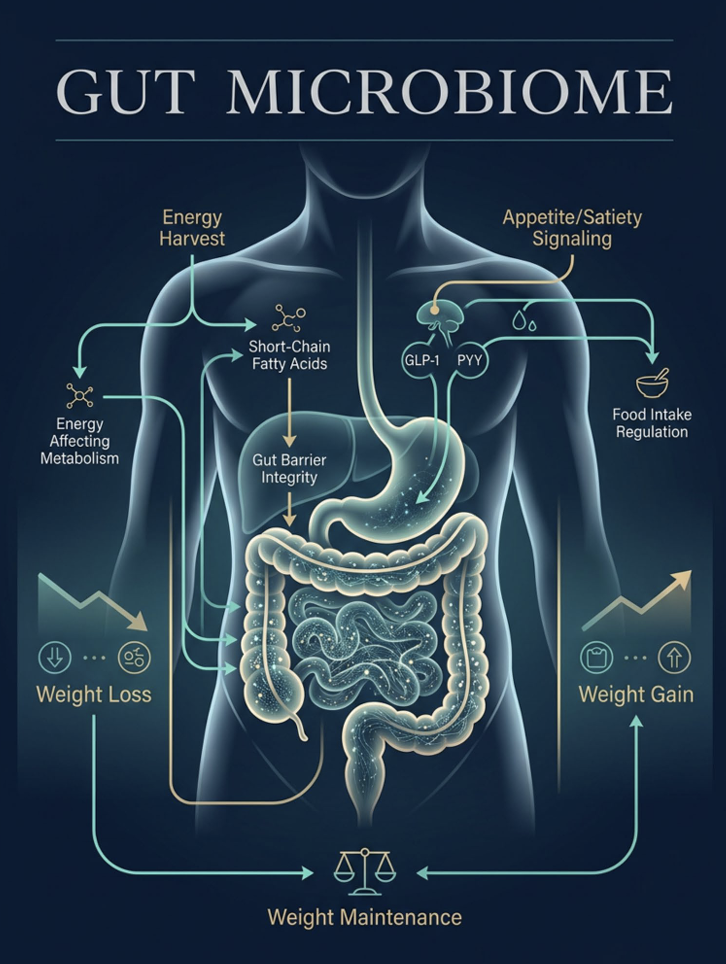
How the Gut Microbiome May Affect Weight Gain
One important way the microbiome may influence weight is by changing how much energy the body gets from food. Some gut bacteria are better at breaking down food parts that human enzymes cannot fully digest on their own. When that happens, the body may absorb more energy from the same meal. In animal studies, researchers found that an Patient Education | Gut Microbiome and Body Weight obesity-associated microbiome had a greater ability to harvest energy from food and increased body fat more than a lean microbiome. [1]
The gut microbiome may also affect inflammation and fat storage. Healthy gut bacteria help produce short-chain fatty acids, which support the gut lining and help with normal metabolic function. When the microbiome becomes unbalanced, a state often called dysbiosis, the gut barrier may weaken and inflammation may rise. Higher inflammation is linked with insulin resistance and a greater tendency to store fat, both of which can make weight gain more likely over time. [2]
Another connection involves the gut-brain axis, the communication system between the digestive tract and the brain. Gut microbes can influence hormones and signals related to hunger and fullness, including appetite and satiety pathways. If these signals are disrupted, people may feel less satisfied after eating or may be more likely to overeat. [2]
How the Gut Microbiome May Affect Weight Loss
The microbiome does not make weight loss impossible, but it may make it easier or harder depending on the overall balance of microbes in the gut. A healthier gut environment may support better insulin sensitivity, lower inflammation, and improved metabolic function. These changes may create conditions that are more favorable for losing weight. Diet matters here: foods rich in fiber, whole grains, fruits, vegetables, and other minimally processed foods tend to support healthier dietary patterns and better long-term health outcomes. [2,5]
At the same time, weight loss triggers changes in the body that can make progress harder to maintain. Research on calorie restriction shows that after weight loss, the body often burns fewer calories than expected. This is sometimes called metabolic adaptation. In simple terms, the body becomes more energy-efficient, which may increase the risk of weight regain. This is one reason why losing weight and keeping it off are not always the same challenge. [3]
How the Gut Microbiome May Affect Weight Maintenance
Weight maintenance is where long-term habits matter most. Research shows that keeping weight off usually requires ongoing lifestyle changes rather than a short-term diet. Regular physical activity, healthy eating patterns, and continued support are strongly linked with better long-term outcomes. [4]
The gut microbiome may support weight maintenance by helping the body process fiber, produce short-chain fatty acids, and keep inflammation under better control. A diet that feeds beneficial gut bacteria may make long-term weight management easier, while a diet high in ultra-processed foods, added sugars, and low fiber may work against both gut health and metabolic health. [2,5]
The Bottom Line The gut microbiome is not the only reason people gain or lose weight, and it is not a magic solution. Still, it appears to influence how the body harvests energy from food, how much inflammation is present, how hunger and fullness signals work, and how well the body responds after weight loss. A healthy lifestyle remains the foundation: eating more fiber-rich foods, staying physically active, getting enough sleep, and building sustainable habits can support both gut health and weight management. [2–5]
Important Disclaimer:
This guidance is for educational purposes only and does not replace individualized medical or mental health care. Please consult your personal healthcare provider for any medical concerns.
References
1. Turnbaugh PJ, Ley RE, Mahowald MA, Magrini V, Mardis ER, Gordon JI. An obesity-associated gut microbiome with increased capacity for energy harvest. Nature. 2006;444:1027-1031. doi:10.1038/nature05414.
2. Dahiya D, Kundu S, Goel I, Khosla Y, Gaur P. Gut ecology and metabolic health: understanding the microbiome-metabolic syndrome connection. In: Nandave M, Pandey RP, Upadhyay J, eds. Gut Health and Metabolic Syndrome: Optimizations with Microbiome Innovations. Springer Nature Singapore; 2025.
3. Most J, Redman LM. Impact of calorie restriction on energy metabolism in humans. Exp Gerontol. 2020;133:110875. doi:10.1016/j.exger.2020.110875.
4. Soleymani T, Daniel S, Garvey WT. Weight maintenance: challenges, tools and strategies for primary care physicians. Obes Rev. 2016;17(1):81-93. doi:10.1111/obr.12322.
5. Wang P, Song M, Eliassen AH, et al. Optimal dietary patterns for prevention of chronic disease. Nat Med. 2023;29(3):719-728. doi:10.1038/s41591-023-02235-5.