
By Dr. Alexandria Hooks, DNP APRN FNP – BC
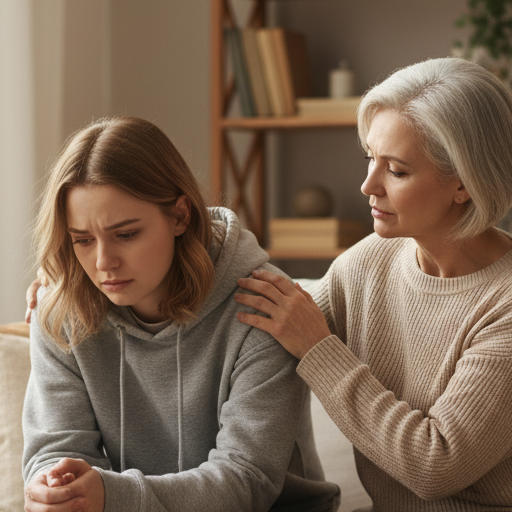
Helping a deeply wounded young woman heal is sacred work. It’s not about ‘fixing’ her, but walking with her as God restores what has been broken mind, body, and spirit at a pace that feels safe for her.
Over the years, I have treated young adult women who have experienced trauma, anxiety, and deep emotional pain, many of whom did not initially recognize their experiences as trauma. I want to encourage anyone who is suffering, or who loves someone who is suffering, that there is real help, real hope, and real healing available. You are not alone.
From an evidence-based standpoint, trauma in young women is sadly common. In the United States, large national surveys show that most women experience at least one traumatic event in their lifetime, and young women are at increased risk for interpersonal and sexual violence (Kilpatrick et al., 2003; Smith et al., 2018). These experiences can have lasting effects on mental, emotional, physical, and spiritual health.
1. Start With Safety, Not Solutions
For traumatized young women with high anxiety, fear, and family dependence, the priority is safety and stabilization, not forcing independence.
It is important to understand that trauma is not limited to obvious events like physical or sexual abuse. Trauma can also arise from chronic emotional invalidation, such as
- Growing up in a home where there was constant yelling, criticism, or unpredictable anger.
- Being regularly belittled, shamed, or called names.
- Having emotions dismissed with statements like “you’re too sensitive,” “stop crying,” or “you’re the problem.”
Many young women do not recognize this as trauma because
- “That’s just how my family talks.”
- “Nothing really ‘bad’ happened to me.”
- “I was never hit, so it doesn’t count.”
However, chronic verbal and emotional abuse can dysregulate the nervous system, create deep anxiety, and lead to fear-based dependence on family, even when the environment no longer feels emotionally safe. Clinically, this pattern is often described as complex trauma or developmental trauma, where repeated emotional harm over time shapes how a person sees themselves, others, and the world (Herman, 1992).
Key steps
Emotional safety
- Speak gently, avoid shaming language (“you’re too sensitive,” “you should be over this by now”).
- Validate their experience: “What you went through was real and painful. Your reactions make sense given what you’ve experienced.”
Physical safety
- Ensure they are in a safe living environment (no ongoing abuse, violence, or severe neglect).
- If there is active danger, crisis hotlines, emergency services, or local shelters may be needed.
Relational safety
Encourage at least one safe, trustworthy adult (mentor, therapist, pastor, or clinician) outside the family system if the family is part of the trauma.
Evidence-based note
Trauma-informed care emphasizes safety, trustworthiness, choice, collaboration, and empowerment as core principles before deeper trauma processing (Substance Abuse and Mental Health Services Administration [SAMHSA], 2014).
2. Encourage Professional Trauma-Informed Care
Healing deep trauma is rarely a “do it yourself” process. It often requires licensed mental health professionals and sometimes medical support.
Helpful evidence-based therapies
- Trauma-focused Cognitive Behavioral Therapy (TF-CBT) – helps reframe harmful thought patterns and reduce trauma symptoms (Cohen et al., 2017).
- EMDR (Eye Movement Desensitization and Reprocessing) – effective for PTSD and trauma-related anxiety (Shapiro, 2018).
- Dialectical Behavior Therapy (DBT) – helpful for emotional regulation, self-harm, and unstable relationships (Linehan, 2015).
- Medication management (by a licensed prescriber) – may be appropriate for severe anxiety, depression, PTSD, or sleep disturbance (American Psychiatric Association, 2017).
How to support her
- Offer to help her find a therapist who specializes in trauma and young adults.
- Normalize therapy as a strength, not a weakness
- “Seeing a therapist doesn’t mean you’re broken it means you’re brave enough to heal.”
Evidence-based note
Randomized controlled trials support TF-CBT and EMDR as effective treatments for PTSD and trauma-related symptoms in adolescents and adults (Bisson et al., 2013; Shapiro, 2018).
3. Understand Family Dependence Through a Trauma Lens
When a young woman is “completely dependent” on her family, it can be:
- Protective (she feels safer near them),
- Restrictive (they may be controlling or overprotective), or both at the same time.
- In homes with chronic yelling or verbal abuse, dependence can form because
- She learns that keeping the peace and staying close is the safest way to avoid conflict.
- She may doubt her own judgment after years of being told she is “wrong,” “dramatic,” or “ungrateful.”
- She may feel guilty or disloyal even considering independence.
- Helpful mindset shift
- Instead of “Why is she so dependent?” ask, “What happened to her that made dependence feel like the only safe option?”
Steps to gently build independence
1. Micro-choices
– Let her make small daily decisions (what to wear, what to eat, which activity to do).
– Affirm her choices: “That was a good decision. You thought it through.”
2. Gradual responsibilities
– Start with simple tasks making her own appointments, managing a small budget, or planning one meal per week.
3. Healthy boundaries education
- Teach the difference between a supportive family and a controlling family.
- A Christian, trauma-informed therapist can help her learn to say “no” safely and respectfully.
4. Mind–Body–Spirit Healing Practices
A. Mind Renewing Thoughts and Emotions
- Grounding skills for anxiety
- 5–4–3–2–1 technique name: 5 things you see, 4 you feel, 3 you hear, 2 you smell, 1 you taste.
- Slow breathing: inhale 4 seconds, hold 4, exhale 6–8 seconds.
- Journaling
- Encourage her to write feelings, prayers, and fears.
- Prompts: “Today I felt afraid when…”, “Lord, I need Your help with…”
- Cognitive reframing (with a therapist)
- Challenge thoughts like “I’m worthless” with truth “I am created in God’s image and loved by Him.”
B. Body Regulating the Nervous System
Trauma lives in the body as well as the mind.
- Regular movement
- Gentle walking, stretching, yoga, or light strength training can reduce anxiety and improve mood (World Health Organization, 2022).
- Sleep hygiene
- Consistent bedtime, no screens 30–60 minutes before bed, calming routines (reading, prayer, soft worship music).
Nutrition
Balanced meals with protein, healthy fats, and fiber help stabilize blood sugar, which can reduce anxiety spikes (Jacka et al., 2017).
Evidence-based note
Lifestyle interventions exercise, sleep optimization, and nutrition have strong evidence for improving anxiety and depression symptoms (American Psychological Association, 2019; WHO, 2022).
C. Spirit Inviting God Into the Healing
For a Christian young woman, spiritual integration can be deeply stabilizing.
- Scripture for fear and anxiety
- “For God has not given us a spirit of fear, but of power and of love and of a sound mind.”
- (2 Timothy 17, NKJV)
- “When I am afraid, I will trust in You.”
- (Psalm 563, NKJV)
- “He heals the brokenhearted and binds up their wounds.”
- (Psalm 1473, NKJV)
- “Come to Me, all you who labor and are heavy laden, and I will give you rest.”
- (Matthew 1128, NKJV)
Spiritual practices
- Praying with her (if she’s open) and reminding her that Jesus sees her trauma and cares deeply.
- Encouraging her to bring her fear and anger honestly to GodHe is not threatened by her emotions.
- Connecting her with a trusted, safe, biblically grounded pastor or women’s ministry leader, especially one familiar with trauma.
5. How Families Can Help Without Controlling
If you are a family member or a close supporter, your role is powerful.
Helpful family behaviors
Listen more than you lecture.
- “I’m here. I want to understand. You don’t have to protect my feelings.”
- Avoid minimizing.
- Don’t say “Other people have it worse,” or “Just move on.”
- Instead, “What you went through was real, and it matters.”
- Acknowledge emotional and verbal harm.
- Statements like, “I realize that constant yelling or harsh words may have hurt you more than I understood at the time,” can be deeply healing when sincere.
- Offer choices, not commands.
- “Would you like me to sit with you while you call the therapist, or would you rather do it alone, and I check in afterward?”
- Model healthy coping.
- Show her how you handle stress, prayer, walking, talking to safe people, and therapy if needed.
Set healthy expectations
- Healing is slow and non-linearthere will be good days and hard days.
- Progress might look like
- Getting out of bed on time.
- Making one phone call.
- Attending one therapy session.
- Going to a small group or church event.
6. Red Flags That Need Immediate Professional Help
- Encourage urgent professional or emergency help if you notice
- Talk of wanting to die, self-harm, or suicide.
- Sudden severe withdrawal, not eating, not sleeping at all.
- Substance abuse to numb pain.
- Ongoing physical or sexual abuse in the home or relationship.
In such cases, contact
- Local emergency services,
- Crisis hotlines, or
- A local emergency department or urgent mental health clinic.
7. A Faith-Based Affirmation for Her
- You can gently share this with her if she’s receptive
- “I am not beyond repair. I am deeply loved by God, even in my brokenness.
- He is healing my mind, calming my body, and restoring my spirit day by day.
- I am learning to trust, to breathe, to choose, and to grow.
- In Christ, I am not a victim; I am becoming a victor.
Important Disclaimer:
This guidance is for educational purposes only and does not replace individualized medical or mental health care. Please consult your personal healthcare provider for any medical concerns.
References
American Psychiatric Association. (2017). Practice guideline for the treatment of patients with acute stress disorder and posttraumatic stress disorder (3rd ed.).
- American Psychological Association. (2019). Clinical practice guideline for the treatment of depression across three age cohorts.
- Bisson, J. I., Roberts, N. P., Andrew, M., Cooper, R., & Lewis, C. (2013). Psychological therapies for chronic post-traumatic stress disorder (PTSD) in adults. The Cochrane Database of Systematic Reviews, 2013(12), CD003388. https//doi.org/10.1002/14651858.CD003388.pub4
- Cohen, J. A., Mannarino, A. P., & Deblinger, E. (2017). Trauma-focused CBT for children and adolescents: Treatment applications (2nd ed.). Guilford Press.
- Herman, J. L. (1992). Trauma and recovery The aftermath of violence from domestic abuse to political terror. Basic Books.
- Jacka, F. N., O’Neil, A., Opie, R., Itsiopoulos, C., Cotton, S., Mohebbi, M., … Berk, M. (2017). A randomised controlled trial of dietary improvement for adults with major depression (the ‘SMILES’ trial). BMC Medicine, 15, 23. https//doi.org/10.1186/s12916-017-0791-y
- Kilpatrick, D. G., Ruggiero, K. J., Acierno, R., Saunders, B. E., Resnick, H. S., & Best, C. L. (2003). Violence and risk of PTSD, major depression, substance abuse/dependence, and comorbidity Results from the National Survey of Adolescents. Journal of Consulting and Clinical Psychology, 71(4), 692–700. https//doi.org/10.1037/0022-006X.71.4.692
- Linehan, M. M. (2015). DBT® skills training manual (2nd ed.). Guilford Press.
- Shapiro, F. (2018). Eye movement desensitization and reprocessing (EMDR) therapy: Basic principles, protocols, and procedures (3rd ed.). Guilford Press.
- Smith, S. G., Zhang, X., Basile, K. C., Merrick, M. T., Wang, J., Kresnow, M., & Chen, J. (2018). The National Intimate Partner and Sexual Violence Survey (NISVS) 2015 data brief – Updated release. National Center for Injury Prevention and Control, Centers for Disease Control and Prevention.
- Substance Abuse and Mental Health Services Administration. (2014). SAMHSA’s concept of trauma and guidance for a trauma-informed approach (HHS Publication No. SMA 14-4884).
12. World Health Organization. (2022). World Mental Health Report
Transforming mental health for all.