
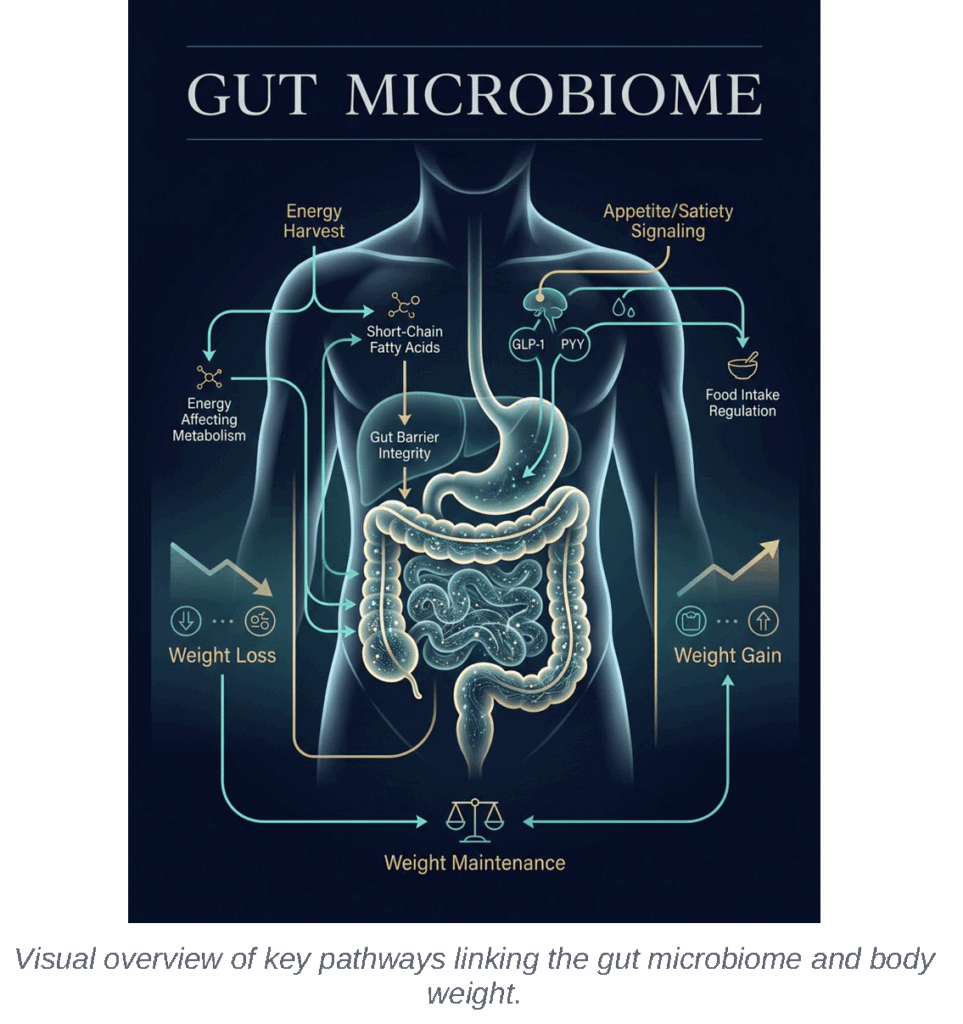
Your gut microbiome is more than just a digestive aid—it is a complex community of bacteria and tiny organisms living within you that acts as a vital regulator for your overall health[cite: 3, 4]. Understanding how this “internal ecosystem” works can be a game-changer for anyone looking to manage their weight[cite: 1, 2].
How Your Microbes Affect Your Weight
Microbes do more than just sit in your digestive system; they actively send signals that affect your metabolism, appetite, and even inflammation levels[cite: 5]. Here are the primary ways they influence the scale:
- Energy Extraction: Some microbes are specialized at breaking down parts of food that your body cannot digest on its own[cite: 7, 8]. This means they can actually allow your body to absorb more energy (calories) from the same meal[cite: 9].
- Hunger and Fullness: Your gut is in constant communication with your brain[cite: 10]. It helps influence signals for appetite and satiety (feeling full)[cite: 10]. When these signals are disrupted, overeating becomes much easier[cite: 11].
- Metabolic Health: A balanced microbiome supports the integrity of your gut barrier[cite: 12]. This helps reduce inflammation and improves insulin sensitivity, making weight management significantly easier[cite: 12].
- Weight Maintenance: After losing weight, your body naturally burns fewer calories[cite: 13]. A healthy gut supports the long-term habits and signals needed to stay on track[cite: 14].
Daily Habits for a Healthier Gut
The good news is that your daily choices directly impact the diversity and health of your microbiome[cite: 24]. Consider these habits to support your inner ecosystem:
- Prioritize Fiber: Fill your plate with vegetables, fruit, beans, lentils, nuts, seeds, and whole grains[cite: 16].
- Limit Ultra-Processed Foods: Choosing minimally processed meals helps support a more diverse and resilient microbiome[cite: 17].
- Stay Active: Regular movement isn’t just for burning calories; it may also support gut health[cite: 18].
- Manage Lifestyle Stress: Both lack of sleep and high stress levels can negatively affect your appetite and your gut bacteria[cite: 19].
- Be Mindful of Antibiotics: While they are essential medicines, they can disrupt helpful bacteria. Only use them when specifically prescribed by a professional[cite: 20].
When to Talk with Your Healthcare Team
If you are experiencing any of the following, it may be time to consult a professional[cite: 37]:
- Ongoing bloating, abdominal pain, constipation, or diarrhea[cite: 38].
- Unexplained weight changes or intense food cravings[cite: 39].
- Conditions like prediabetes, insulin resistance, or metabolic syndrome[cite: 40].
By Dr Alexandria Hooks DNP, APRN, FNP-BC